


A giraffe reaches into the branches of a tree, curls its tongue around a cluster of leaves and begins to feed. After a while, it moves on to another tree. It is an everyday sight on safari at Shumbalala Game Lodge. But while our attention naturally follows the giraffe, something rather remarkable may be happening in the plants around it. The tree isn’t simply standing there, doing nothing. Plants can sense damage,...
After Dark: Getting to Know the Lowveld’s Scrub Hare
Posted on Tue October 13, 2026.
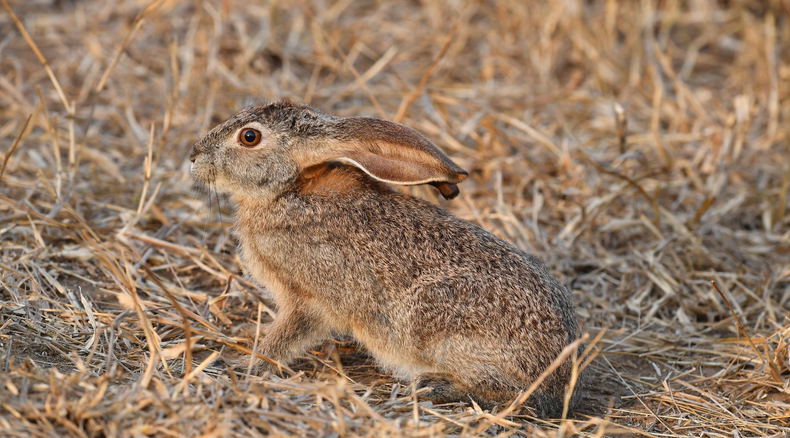
The sun has slipped below the horizon at Shumbalala Game Lodge, and the bush is beginning to change shift.
The heat of the day softens. Nightjars begin calling. The beam of a spotlight moves quietly across the grass and along the road ahead.
And then, there it is.
A small shape sitting perfectly still in the track. Two long ears. Large eyes. For a moment, it seems undecided about what to do next. Then those powerful hind legs spring into action and it darts away into the darkness.
A scrub hare.
Or, depending on which scientist you ask, perhaps an African savanna hare.
It may not be the sighting everyone talks about over breakfast the next morning, but spend a little time getting to know this familiar Lowveld resident and you may find yourself looking forward to your next encounter.
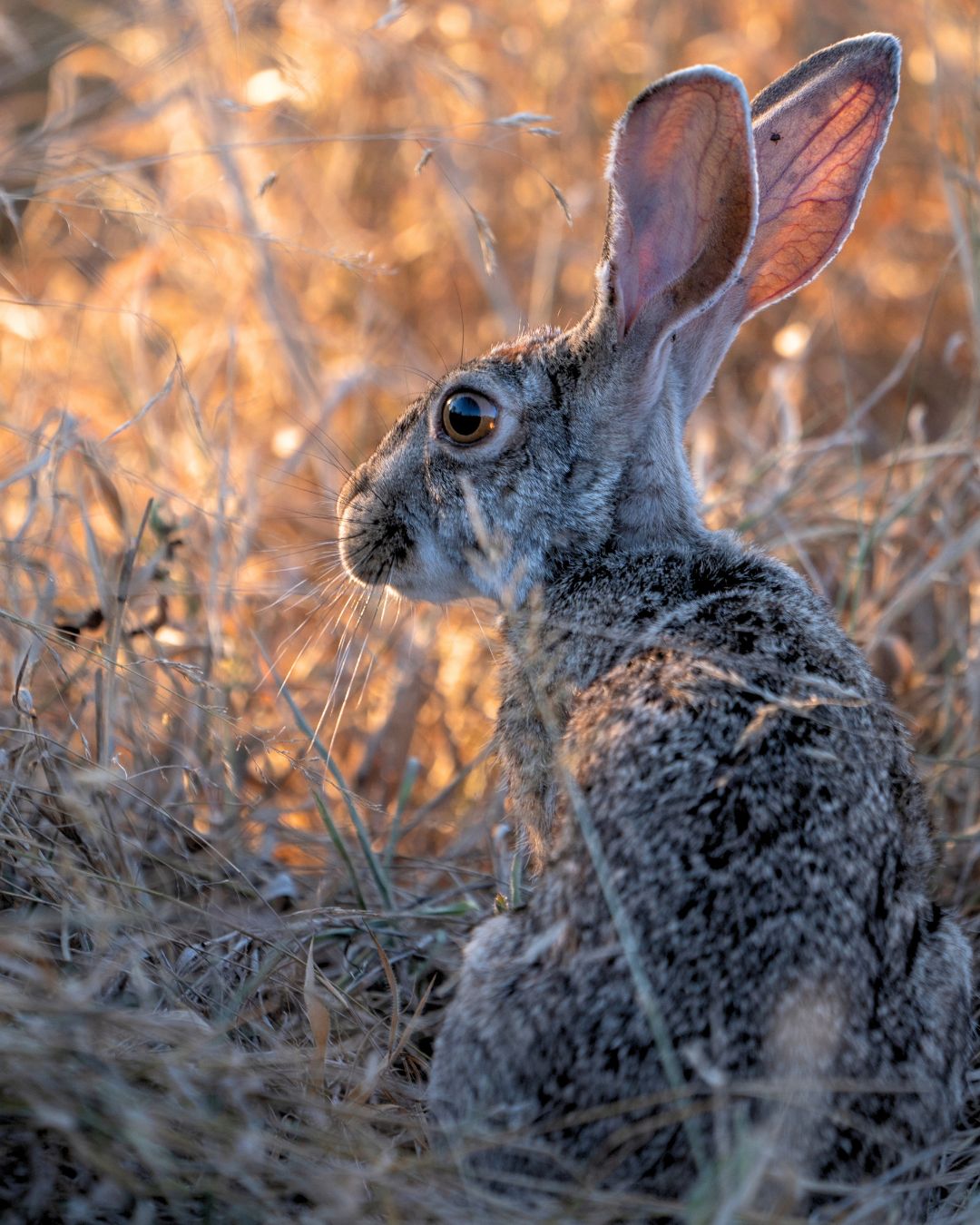 Photo taken at Shumbalala Game Lodge by Jordi Woerts.
While we are sleeping…
These hares are mostly nocturnal, which is why our encounters with them often happen after sunset.
During daylight hours, they don’t retreat underground. Instead, a hare finds a shallow depression known as a form, where it lies low against the ground. With its grizzled grey colouring and ears folded back, staying still can make it remarkably difficult to spot.
As evening arrives, its day begins.
It heads out to feed, grazing mainly on grasses when fresh green growth is available. During drier periods, leaves, stems and underground plant parts can also become part of the menu.
There is one other dining habit we should probably mention.
Hares practise coprophagy, which means that certain droppings are eaten so food can pass through the digestive system a second time, allowing the body another opportunity to absorb nutrients.
Perhaps not a dinner-table conversation for everyone, but a rather clever way of making the most of what’s available in the bush!
Freeze… then run
For an animal capable of impressive speed, a hare’s first response to danger isn’t necessarily to race away.
It’s to disappear.
By freezing against the surrounding vegetation, the hare gives its camouflage a chance to work. But if that fails, things change very quickly.
Hares are often said to reach speeds of around 60–70 km/h, using their powerful hind legs to accelerate and changing direction rapidly as they try to escape predators.
It’s a behaviour many safari-goers will recognise.
A hare appears in the road ahead of the game drive vehicle and suddenly begins zig-zagging from one side to the other before eventually disappearing into the grass.
You may hear guides explain that the hare is reacting to the shifting shadow created by the vehicle’s lights, interpreting it as something pursuing it. It’s a familiar piece of guide lore rather than something that has been scientifically proven, but either way, giving the animal space and an opportunity to leave the road is always the kinder approach.
After all, a night in the bush comes with enough real predators to worry about.
Jackals, leopards, wild dogs and birds of prey are among the animals that may see a hare rather differently to us.
Spring brings new beginnings
October is a wonderful month to be paying attention to these little residents.
They can breed throughout the year, but births peak between September and February, meaning this time of year brings the possibility of a new generation in the bush.
And this is where we meet one of our favourite hare facts.
A baby hare is called a leveret, and unlike a baby rabbit, it arrives surprisingly well prepared for life.
Leverets are born fully furred, with their eyes open, and are able to move very soon after birth. Baby rabbits, by comparison, are born blind and hairless and spend their earliest days protected underground.
Mother hares also take a rather hands-off approach to parenting. Their young are left alone for much of the time, with the mother returning briefly to nurse them.
At around a month old, the leverets are already becoming independent.
For something that looks so small and vulnerable, life in the bush starts quickly.
But is our scrub hare actually a scrub hare?
Here’s where things become particularly interesting — and, admittedly, where we went down a bit of a rabbit hole while researching this story.
Although, knowing what we now know about hares, perhaps a hare's form would be more accurate.
For years, the hares seen darting across Lowveld roads have commonly been called scrub hares. You’ll still hear that familiar name used by guides, safari-goers and wildlife resources today.
But ask science, and the answer isn’t quite as simple.
Genetic research has shown that hares in northern South Africa belong to a distinct lineage from those farther south. What scientists haven’t yet settled is whether those differences are enough to call them separate species.
South Africa’s Red List places the northeastern hares with the African savanna hare, while other references continue to regard the hares of southern Africa as scrub hares. Even the Red List acknowledges that more molecular research is needed to resolve their status.
Part of the challenge is that hares are surprisingly difficult to untangle. Different species can look very similar, and their evolutionary history includes interbreeding and shared DNA.
So, despite being a familiar sight in the Lowveld, there is still more to learn about exactly where these hares fit into the family tree.
Until further genetic research gives us a clearer answer, should a pair of long ears suddenly appear in the road during an evening game drive at Shumbalala Game Lodge, chances are you’ll still hear:
“Scrub hare!”
Sometimes the more we learn about the bush, the more we discover how much there still is to understand.
Small animal, important place
It is easy to measure a safari by its biggest moments.
A leopard resting in the branches of a tree. Elephants moving silently past the vehicle. Lions calling somewhere beyond the light of camp.
But the bush isn’t held together by its famous residents alone.
Hares graze vegetation and become prey for other animals, but their connections reach into parts of the ecosystem we rarely notice too.
One study examined 264 hares in Kruger National Park and found 13 different tick species living on them.
It’s a small detail, perhaps, but a lovely reminder that even an animal we might pass without much thought has its place within a much bigger web of life.
There is something rather special about that.
The more time we spend in nature, the more we realise that there is very little here that is truly ordinary.
So, the next time the spotlight finds two long ears on the road ahead, perhaps give that little shape an extra moment of your attention.
Watch it freeze. Notice how beautifully its coat disappears against the earth. And when those powerful hind legs finally send it bounding back into the darkness, remember that you’ve just met another small but important character in the story of the Lowveld.
Sometimes, the sightings we almost overlook are the ones that invite us to look a little closer.
Further Reading
Can trees communicate with each other? The hidden conversations of the bushveld
Wed September 2, 2026
Read This Article
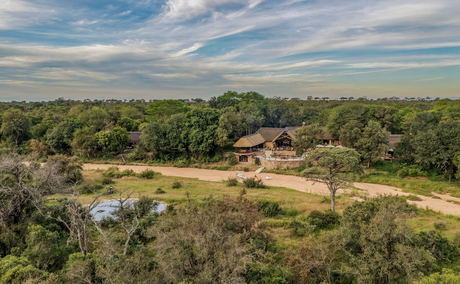
Beyond the Boundaries: Shumbalala Game Lodge in the Greater Kruger
Tue August 25, 2026
Read This Article
“Are we in Kruger?” It sounds like a simple question, and it is one that guests sometimes ask when trying to understand exactly where Shumbalala Game Lodge is located. The answer needs a little more explanation than a simple yes or no, but behind it lies an important story about Thornybush Nature Reserve, conservation and the value of giving wildlife the space to move. Shumbalala Game Lodge is situated within Thornybush Nature...
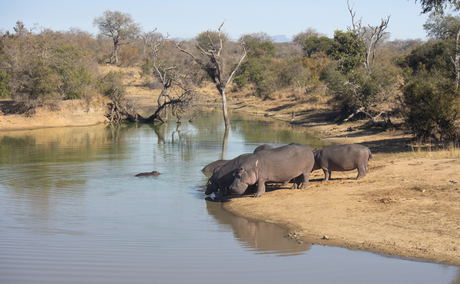
Winter in the Wild: How Lowveld Wildlife Adapts to the Dry Season
Wed July 29, 2026
Read This Article
Ask any guide about winter in the Lowveld and they’ll probably mention visibility before anything else. By July, the summer grasses have faded to gold, many deciduous trees have shed their leaves, and the bush begins to feel more open. Guests often comment that the wildlife seems more abundant at this time of year. The reality is a little more interesting. Winter doesn’t bring more animals to the landscape; it changes how...


Share This Post